Stand By Me

A public engagement design concept
Empowering the voices of homelessness

#Concept Design #Prototyping

Designing For Marginalised Social Groups

In the past few decades, our society has greatly benefited from rapid technological progression, however, not everyone has benefited equally from these advancements. Increasingly, our efforts are spent on designing and building hyper-targeted products for the affluent consumers, while members of marginalised social groups, whom life could benefit greatly from a just fraction of this collective efforts are being left further and further behind. Never before do design professionals like us have the power to impact the daily lives of so many millions of peoples at once, consequently, considerations on where we expend these skills and talents have also become ever more important than before.

Stand By Me is a public engagement design concept that aims to explore how design and technology could be used to empowers marginalised and under-represented social groups in our society. This project serves as an entry to the CHI 2017 student design competition (Conference on Human Factors in Computing Systems). We work as a team to research, design, and prototype an interactive communication platform that empowers the voices of the homeless in London. The project aims to raise awareness of the issues surrounding homelessness, while at the same time also promoting public engagement, support and intervention.
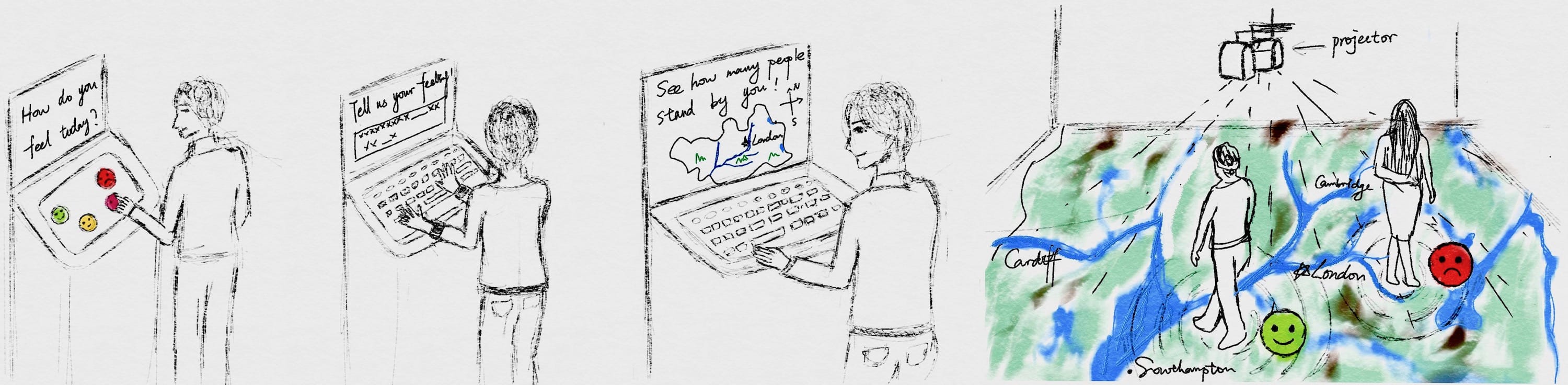

Stand By Me concept - mood logging device (left), interactive floor map (right)

London's Homeless Population

In an explorative project with highly limited time constraints such as this, having a well-defined project boundary will allow clear goals and success criteria to be set and measure. As a result, we have decided to limit our exploratory scope geographically, focusing our efforts on understanding and designing for the empowerment of the homeless population in London.

My Role / Process

I assume the role of product designer in this project, leading the design and development of design concepts, developing interactive and video prototypes, as well as interface wireframes. I also help conducted user research interviews and evaluation of designs. We then equally share our workloads when generating the final deliverables for the design competition submission.

  • 1.

    Background Research

    We first investigate government statistics and charities reports to identify problems currently faced by the homeless on a daily basis.


  • 2.

    Brainstorming & Ideations

    Potential solutions to problems were rapidly generated and discuss, evaluating the potential impact, novelty factor and viability of each idea to help guide our design direction. 


  • 3.

    Developing Design Concept

    We focus on developing one potential design concept further, generating storyboards and interface mockups. This initial design concept was presented to homeless shelter managers, gaining feedbacks to further refine our design.

  • 4.

    Prototyping

    We built a cardboard prototype of the interactive device together with wireframes mockups of the interface for testing and evaluation purposes. A high-fidelity mockup of the project website was also developed.

  • 5.

    Evaluation & Testing

    A series of semi-structured interviews with volunteers from a local homeless shelter were conducted to validate our design concept.


  • 6.

    Generating Deliverables

    Final deliverables for the design competition were generated, including a final report detailing our process, a one-page poster explaining the project, and a video prototype of the design interface.

To Understand Homelessness

After deciding on the scope of the project, we conducted a series of background research, going through government statistics and charities reports to build a basic understanding of the problems faced by homeless peoples on a daily basis. We then conducted semi-structured interviews and employs the use of surveys to gauges the general public sentiments toward homelessness.

It is as expected for people in this difficult situation to have many problems relating to physical wellbeing such as food, shelters and safety. What we found more surprising, however, was that mental wellbeing related issues such as loneliness, low self-esteem, and relationship breakdown are just as prevalent, if not even more so than the physical worries they faced. This is even more concerning knowing that due to limiting resources, the vast majority of the help provided by the government and charitable organisation solely came in the form of basic living necessities such as food, temporary accommodation, and extremely limited financial support.

Homeless statistics (homeless.org.uk)

Emotional Wellbeing & Social Stigmas

Although our research has shown that many among the homeless have access to technology, long-term social isolation often leads to great emotional distress among these individuals and it is a key issue that we aim to address in this project.

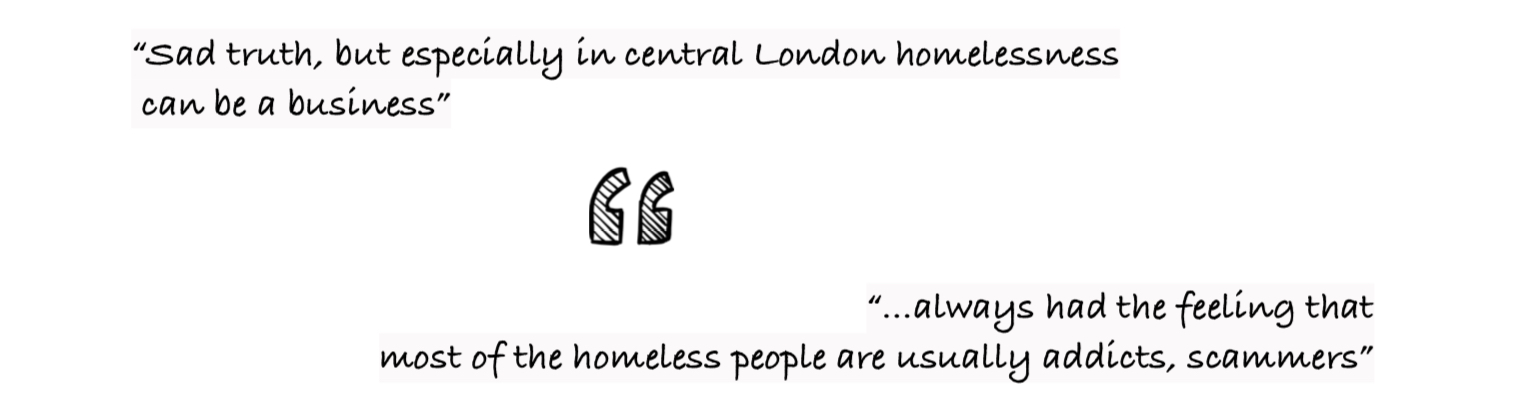
We have also found qualitative evidence suggesting that there exist a strong, negative misconception among the public in regard to homelessness and that these sentiments mainly revolved around the issue of trust. However, many have also expressed a willingness to learn more about the story behind each homeless individual and how they can contribute and help effectively. This finding suggested that building empathy, understanding and trust are the key factors to drive engagement and support from the public.

These findings has led to the core idea of devising an interactive communication channel that could bridge the communication gap between these two social group, build trust, dispel negative social stigmas, whilst at the same time, tackle our goal of addressing emotional distress issues among the homeless. This decision, in turn, has made the general public our secondary user group.

Quotes from our general public interviewees capturing the negative stigmas associated with homelessness

Generating Design Ideas

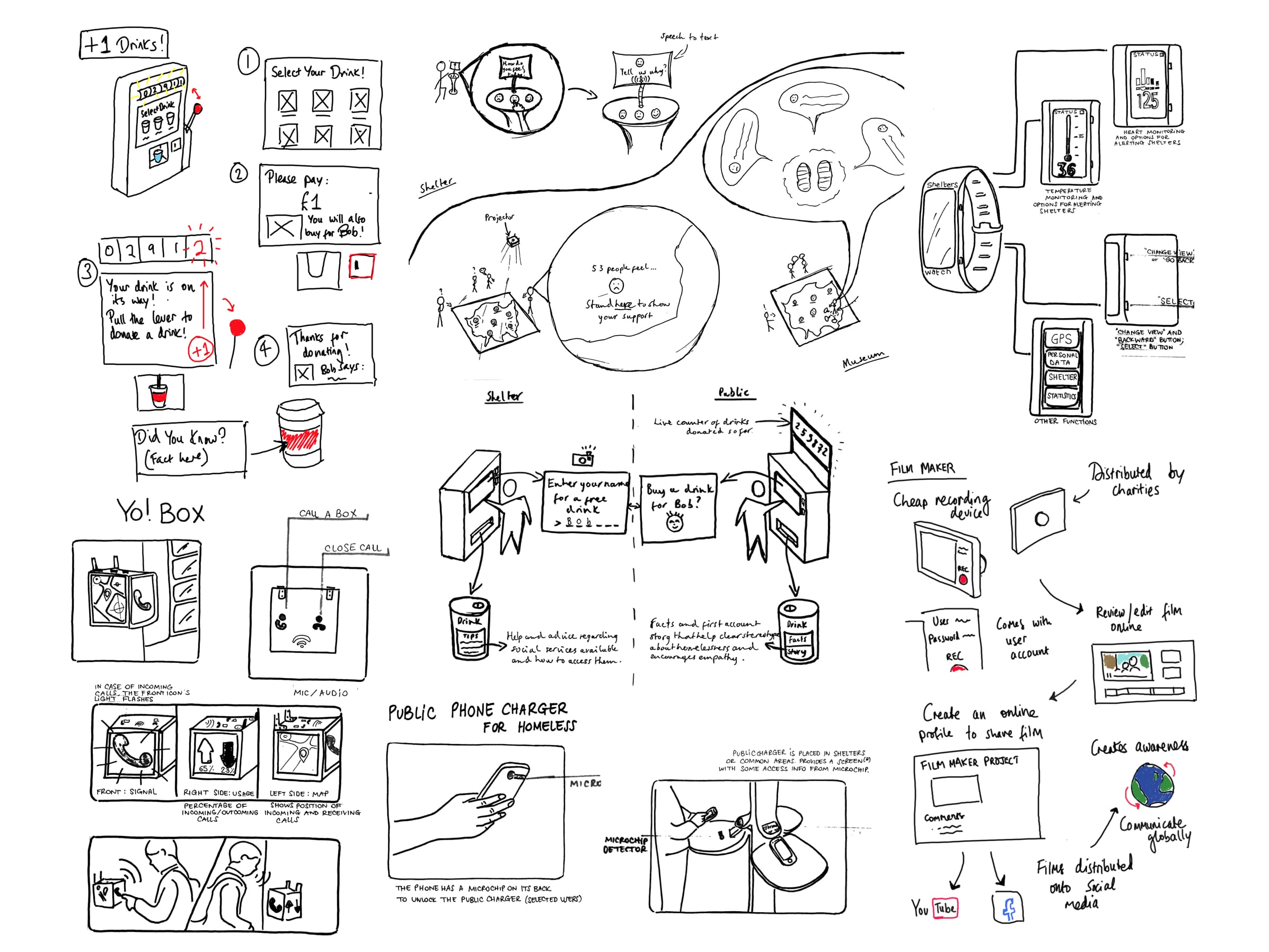
We generated and evaluates a multitude of design ideas that could address the problems currently faced by the homeless to actively visualise how this platform could take shape. After analysing and narrowing down the initial ideas, we focus on exploring the idea of a vending machine's network that encourages micro-interaction through a system of drink donation. Located in public spaces and homeless shelters, these machines allow the user to purchase additional drinks and attach supportive messages to them, allowing homeless peoples to claim these drinks and facilitate a brief social interaction with the donators.

Explorative ideation sketches adressing problems identified

Refining Design Concept

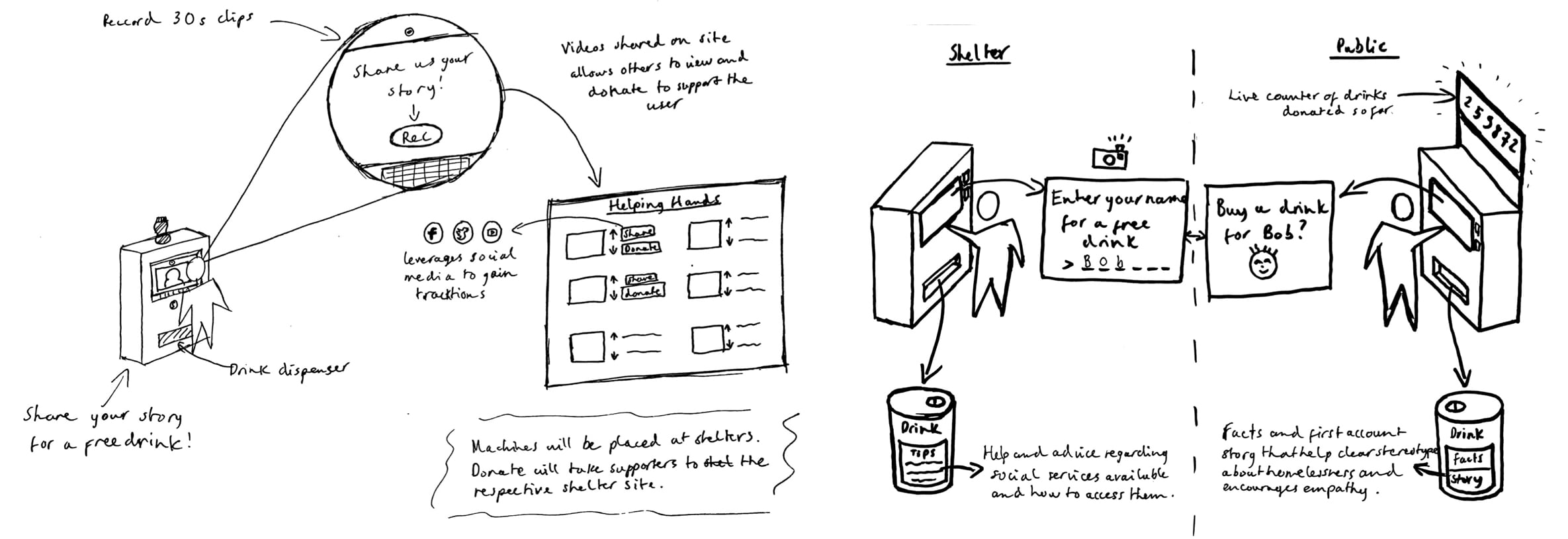
Despite its novelty factors, the drink donation machine idea proves to be impractical when we validate this idea with the manager of a local homeless shelter, stating that most shelters already provided a selection of free drinks. Additionally, the concept of drink donation itself could be a distraction from the main goal of empowering voices. We have also found that vandalism is one of the main concern for systems located in homeless shelters, and future designs should factor in this potential problem. Incorporating all we have learnt in the exploration phase and taking into consideration the feedback we gathered, we develop this idea further and arrived at our interactive communication platform concept.

Social drink donation concept

Prototype & Testing

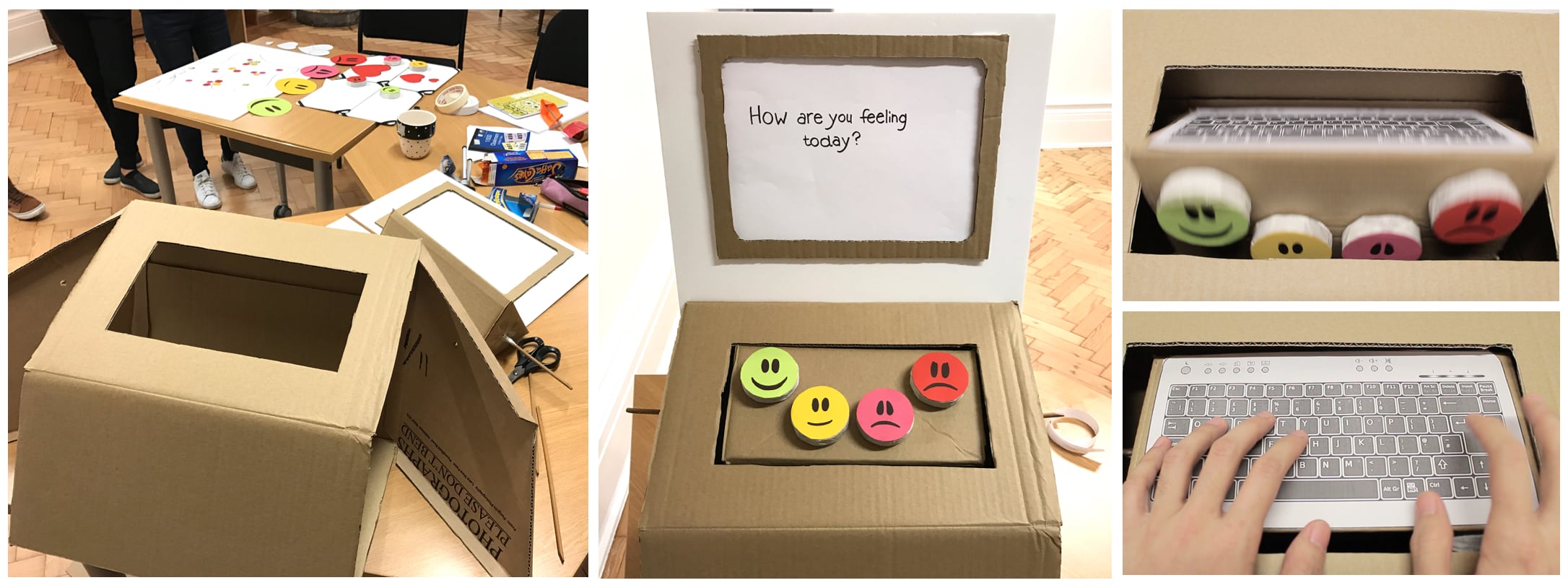
We conducted a series of semi-structured interviews with volunteers from a local homeless shelter to validate our design. A “quick and dirty” interactive prototype of the mood logger (built from cardboard) were used in this process to better communicate our intention and ideas. The general feedback we received from these interviews were positive, indicating the possibility of developing this idea further with functional prototype and testing. These feedbacks were taken into consideration to further refine the interface of the mood logger and the project website. Wireframes of the project website were then developed and evaluated to generate a final high-fidelity mockup. Finally, a video prototype of the platform interactions was developed to better communicate our design concept to a wider audience.

Cardboard prototype of the moog-logging device

Stand By Me

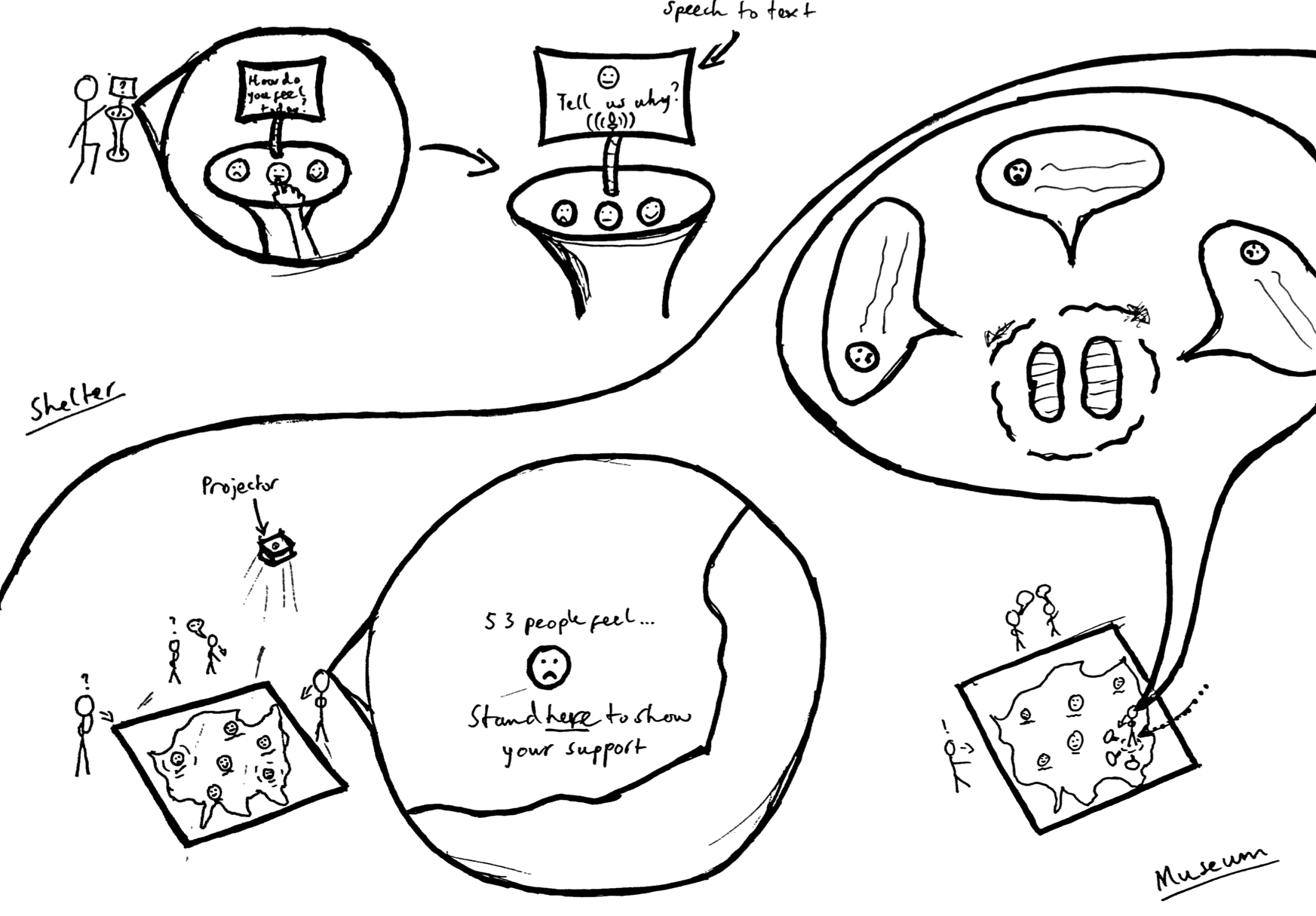
Stand By Me is an interactive communication channel that connects homeless people to the wider general public. The system consisted of two main parts, a Mood Logging machine located in homeless shelters across London, and an Interactive Map located in a museum exhibition.


The Mood Logger is an easy to use device located in homeless shelters across the city, asking the user a simple question: “How do you feel today?”, also prompting them to share more about why they feel this way. This gave the homeless an opportunity to express their worries and share their stories, encouraging the fact that their voices matter. The aggregation of these feedbacks and stories are then displayed on an interactive map, projected on the floor of a museum exhibition in the city, physically visualised the emotion of homeless people across the city, based on their geographical locations.

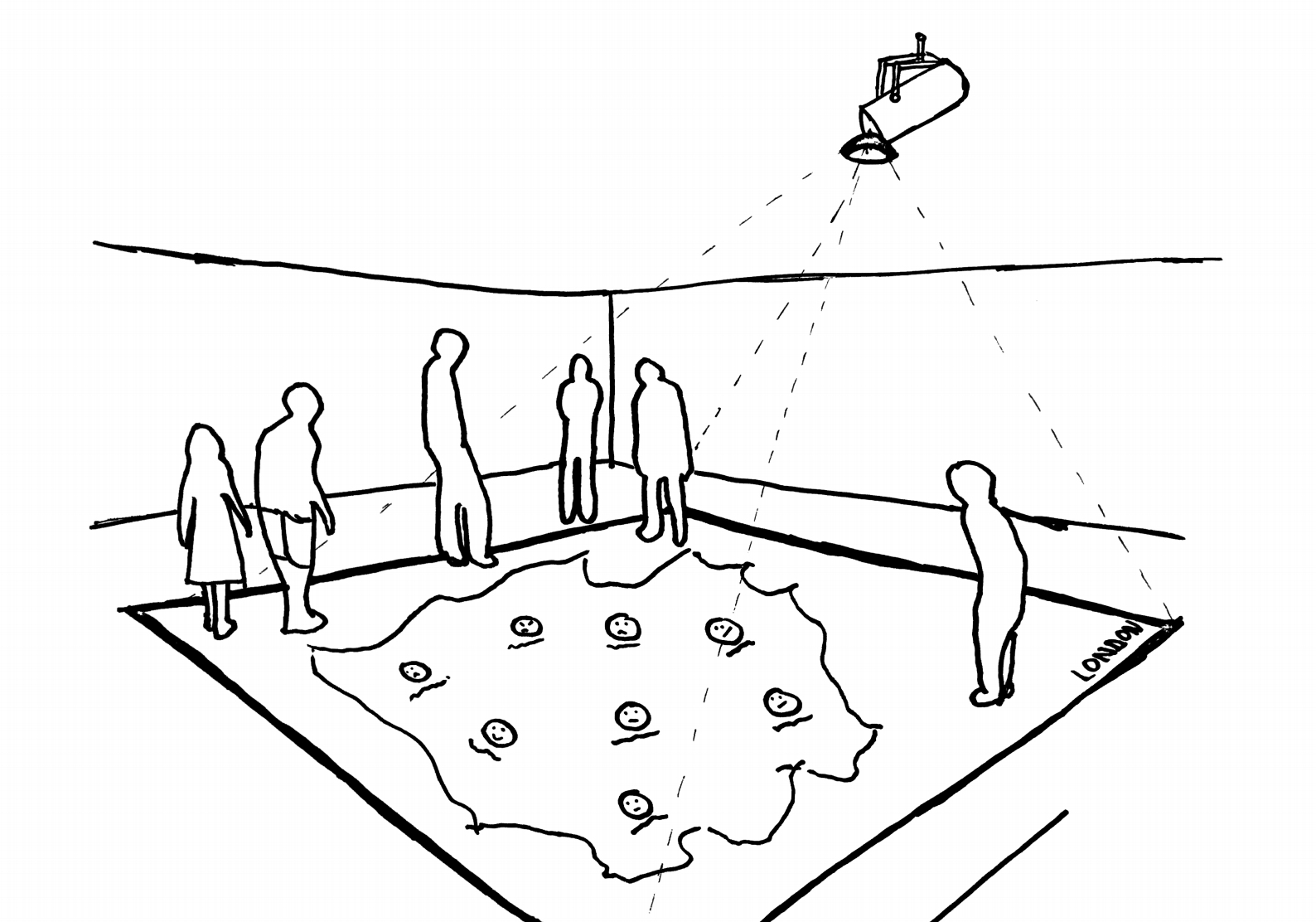
Shape like the map of London, exhibition visitors can explore these shared thoughts and show their support to the author by physically walking to and interacts with the representations on the map. This action symbolised the idea of “standing by” and providing emotional support to others in times of needs. The support shown by the exhibition visitors are feedback to the author through the Mood Logger, acting as positive reinforcement knowing that people's care for and empathise with their situation.


We decided to focus on enriching the novelty and explorative experience of the system as our research has shown that this is a key factor in attracting user’s attention and boosting the level of engagement. High-quality engagement with the interactive display, in turn, encourages users to be more empathetic toward the stories that the homeless have shared. The setting of a museum exhibition was also chosen deliberately due to its unique environmental and psychological characteristics where visitors tend to be more open toward exploring new ideas, potentially pique their interest on how technology can be used to empower marginalised groups in a fun and interactive way.

Leveraging the exposure this system brings, interested exhibition visitors are encouraged to find out more information about the project on our website through a call to action on the interactive map. The project site allows users to directly support and make meaningful changes to the homeless life through donations, mentoring, and signing up for voluntary works.

Learnings

This exploratory project has brought about many unique challenges, given me a novel opportunity to further develop my skills as a designer. A key takeaway I have learnt from this project was that designing for an unconventional target user group bring about unfamiliar challenges, getting creative with your problem-solving methods and striving to gain a deeper level of engagement and understanding of these users are essential to overcoming these challenges.

As design professionals we have choices about what to work on. By participating in this competition and share our ideas, we brought to attention, raise awareness, and encourages discussion about one of the most important issues our society currently faced. I hope this project inspire more designers to make a positive impact to the lives of those who are less represented in our society.